
Whether you’re browsing a supermarket shelf or shopping online, the wide variety of Rooibos available can quickly feel overwhelming.
From traditional and green varieties to loose leaf, teabags, organic and flavoured blends, the options continue to expand as Rooibos grows in popularity. Today, it’s stocked in thousands of retail outlets worldwide and widely available online – making it more accessible than ever, but also harder to choose.
The good news? Finding the right Rooibos doesn’t have to be complicated. It ultimately comes down to your taste preferences, lifestyle and how you enjoy it. This guide will help you narrow down your options with confidence.
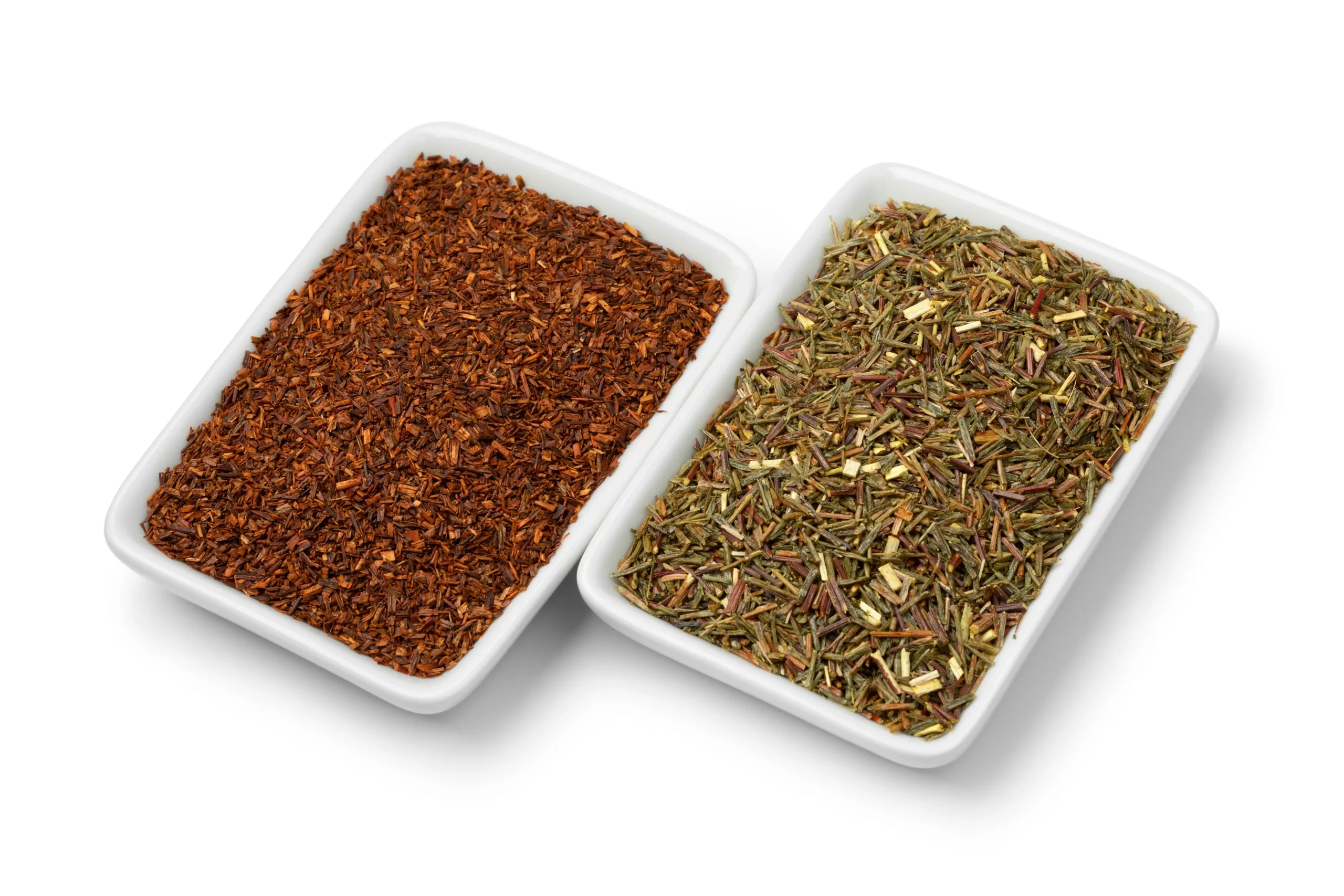
Start with the basics: red vs green Rooibos
All Rooibos comes from the same plant, Aspalathus linearis, which grows exclusively in South Africa’s Cederberg region.
The key difference lies in how it’s processed:
- Traditional (red) Rooibos is oxidised (often called “fermented”), giving it its signature reddish-brown colour and naturally sweet, smooth flavour.
- Green Rooibos is unoxidised and dried immediately after harvesting. This results in a lighter colour and a fresher, slightly grassy taste.
If you enjoy a rich, naturally sweet and comforting cup, red Rooibos is likely your go-to. If you prefer something lighter and more delicate, green Rooibos may be worth exploring. It also contains higher levels of certain antioxidants due to minimal processing.

Loose leaf vs teabags: convenience or craft?
The next choice is about how you like to prepare your Rooibos:
- Teabags are convenient, consistent and ideal for busy routines or on-the-go lifestyles.
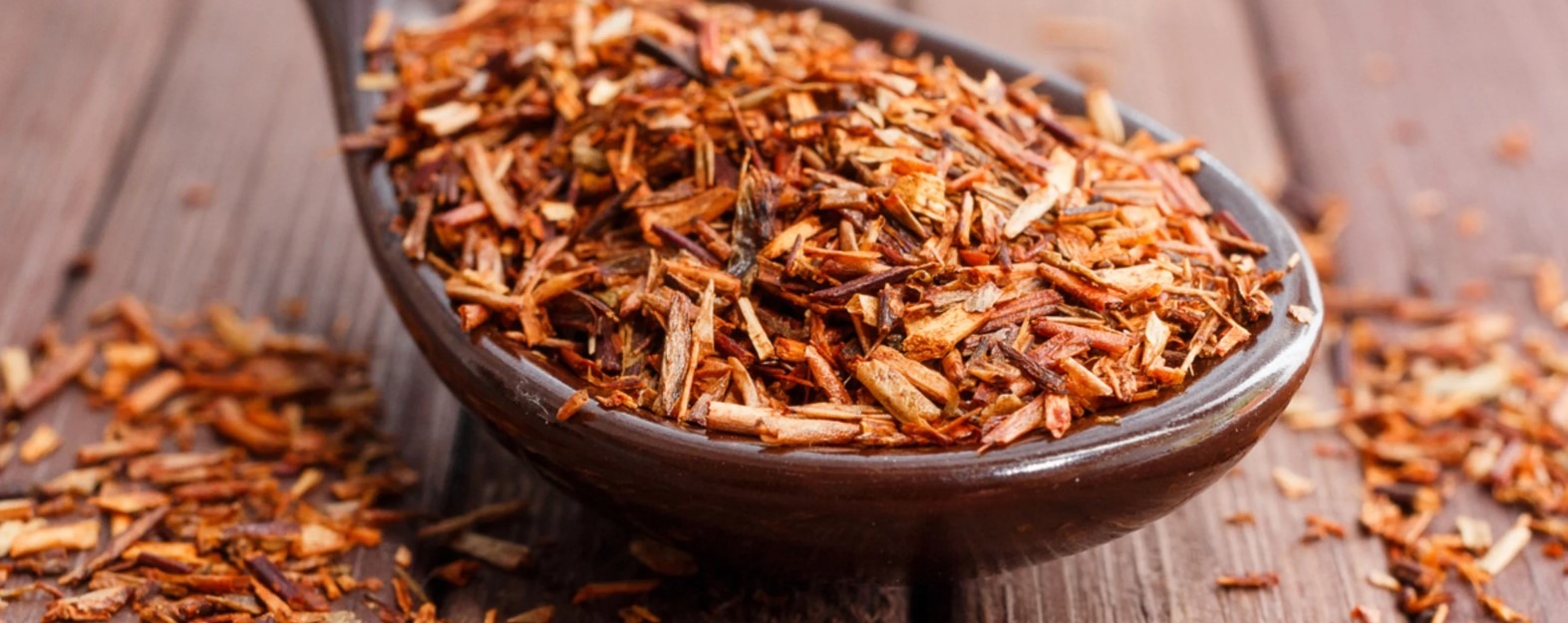
- Loose leaf Rooibos often delivers a fuller flavour, as the leaves have more space to expand during brewing.
If convenience matters most, teabags are perfectly suitable. But for those who enjoy a more mindful tea ritual or want to experiment with flavour intensity, loose leaf is worth the extra step.
Choosing Rooibos blends
Rooibos is increasingly available in flavoured and functional blends, combined with ingredients like citrus, vanilla, spices or herbs. These blends can enhance the natural flavour of Rooibos or cater to specific preferences and occasions.
- Flavoured blends like vanilla, caramel and berry are ideal if you enjoy a sweeter, more indulgent cup without adding sugar.
- Herbal blends with mint, chamomile or ginger can offer a more complex taste profile and are often chosen for relaxation or wellness routines.
- Spiced blends, such as chai-style Rooibos provide a bold, warming option, especially in colder months.
When choosing a blend, check that Rooibos remains the primary ingredient and that added flavours are natural rather than artificial where possible.

How to spot quality Rooibos
Not all Rooibos is created equal. Here are a few simple indicators of good quality:
- Colour: High-quality red Rooibos should have a rich, deep reddish-brown hue when brewed.
- Aroma: Look for a naturally sweet, slightly nutty or earthy scent.
- Taste: A smooth, rounded flavour without bitterness is a good sign.
- Cut: Fine, uniform needle-like leaves indicate careful processing.
Rooibos is naturally low in tannins and caffeine-free, so it should never taste harsh or overly astringent.

Why origin matters
One of the most important, yet often overlooked, factors is origin. Authentic Rooibos is grown only in South Africa and its name is protected by a designation of origin.
When buying online or abroad, check that the product clearly states its South African origin. This ensures you’re getting genuine Rooibos with the characteristic flavour and quality associated with the region.
Choosing the right Rooibos isn’t about finding a single “best” option, but rather discovering what suits you. Whether you prefer the bold sweetness of traditional Rooibos, the fresh notes of green, the added variety of flavoured blends or the convenience of teabags vs the ritual of loose leaf, there’s a perfect cup for every lifestyle and occasion.
Start simple, experiment where you can and let your taste guide you.